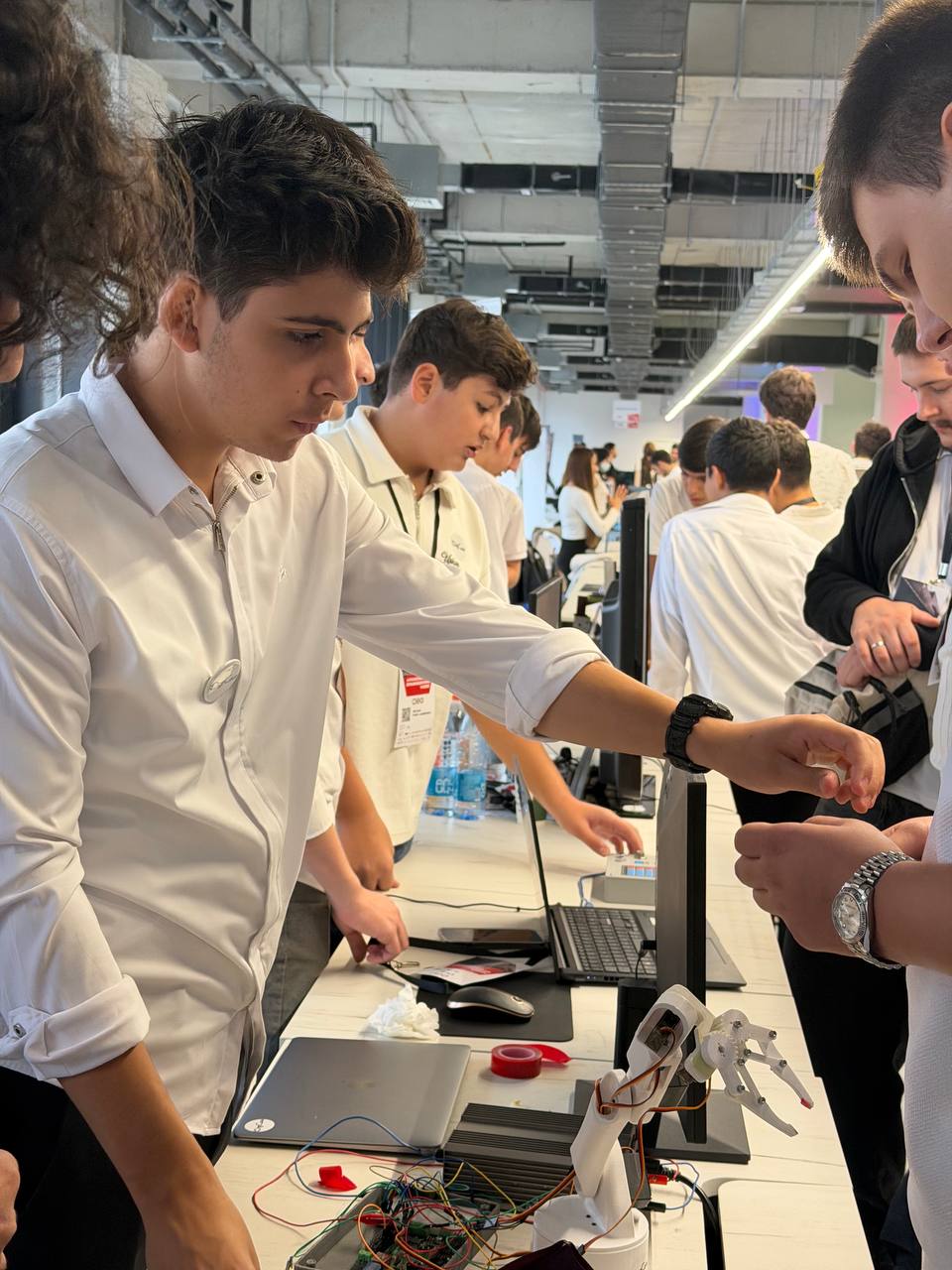
Physical AI
Physical AI is designed for students who want to understand how artificial intelligence works not only in software, but also in real physical systems. The course connects robotics, sensors, computer vision, embedded systems, control logic and AI decision-making. Students learn how intelligent machines perceive the world, process information and act through motors, mechanisms and feedback.
Advantages
- Students learn AI through real systems, not only screen-based examples.
- The course connects robotics, sensors, computer vision, control and embedded logic.
- Projects are based on industry-style thinking: perception, decision-making, testing, safety and system integration.
What is included in the program?
- Introduction to embodied intelligence and intelligent machines
- Sensors, cameras, signals and real-world data collection
- Computer vision basics for robotic perception
- Control logic, feedback, motors and actuator behavior
- AI decision-making connected to physical actions
- Final Physical AI prototype or system demonstration
Program modules
The program is organized as a connected learning path: theoretical foundations, practical labs, prototype development, testing, and presentation.
Physical AI fundamentals
Physical AI system conceptStudents learn what makes AI different when it is connected to the physical world, including perception, action, feedback and safety.
Sensors and real-world data
Sensor-based data experimentStudents work with sensors, cameras, distance measurement, signals, noise, calibration and data collection.
Computer vision for machines
Vision-based mini demoStudents explore image processing, object detection ideas, camera input and machine perception.
Control and feedback
Controlled movement taskStudents learn how motors, mechanisms, feedback and control logic allow a system to react and correct behavior.
Final Physical AI project
Final Physical AI demoStudents design, build, test, improve and present a small intelligent system that senses, decides and acts.