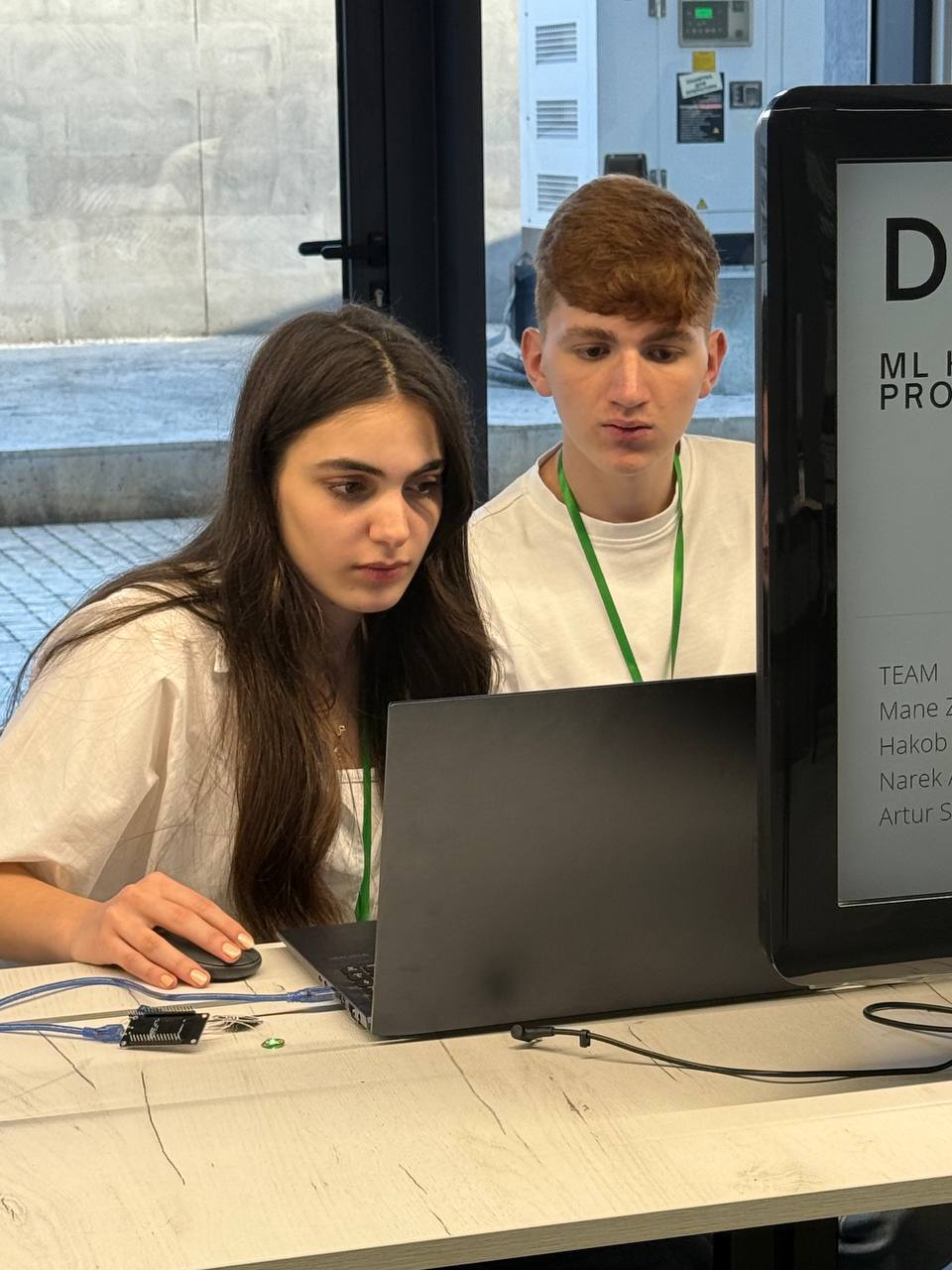
ML in Embedded Systems
ML in Embedded Systems connects machine learning with real devices. Students learn how data is collected from sensors and cameras, how models are trained and evaluated, and how AI behavior can be connected to microcontrollers, embedded computers and edge devices. The course is designed for students who want AI to work not only in notebooks, but also inside practical hardware systems.
Advantages
- Students connect ML models with sensors, cameras and embedded devices.
- The course teaches both model logic and deployment thinking.
- Projects prepare students for smart devices, robotics, automation and edge AI systems.
What is included in the program?
- Python, data collection and ML foundations for embedded projects
- Sensor and camera data preparation
- Classification, detection and model evaluation basics
- Optimization, latency, memory limits and edge deployment concepts
- Final embedded ML prototype with testing and presentation
Program modules
The program is organized as a connected learning path: theoretical foundations, practical labs, prototype development, testing, and presentation.
Embedded ML foundations
Embedded ML system conceptStudents learn how machine learning changes when it must run with hardware limits, sensors and real-time constraints.
Sensor and camera data
Prepared datasetStudents collect, clean and label data from simple sensors or image sources.
Model training and evaluation
Evaluated ML modelStudents train basic models, evaluate quality and compare results before deployment.
Hardware-connected AI behavior
AI hardware demoStudents connect model output to physical behavior such as alerts, motors, decisions or monitoring.
Final embedded ML project
Final embedded ML demoStudents collect data, train or adapt a model, connect it to hardware, test and present results.